What Is Your Cvv Number on a Credit Card
{"menuItems":[{"label":"What is a CVV or CVC number?","anchorName":"#what-is-a-cvv-or-cvc-number"},{"label":"Compare three popular credit cards","anchorName":"#compare-three-popular-credit-cards"}]}
If you're using your credit card to make a purchase online or over the phone, you'll usually be asked to provide the name on your card, the account number, expiration date and something called your CVV or CVC number. These three or four digits are located on the back of your card and are used to help secure your finances when using your card. Use this guide to find out what these numbers mean, what they're used for and how they help protect your credit card.
Back to top
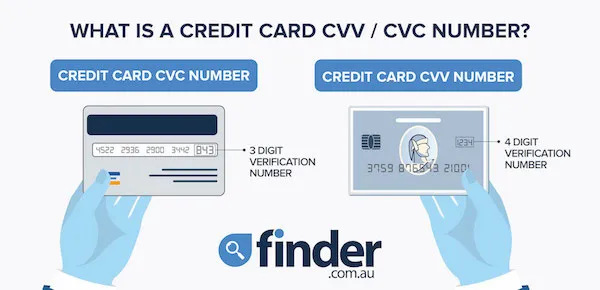
Your CVV number (or card verification value) or CVC (card verification code) on your credit card or debit card is a three or four-digit number on your card. If you have a Visa or Mastercard branded credit or debit card, it'll be a 3 digit number located on the back of your card. If you're using an American Express-issued card, the CVV will be a four-digit number found on the front of your card.
The CVV is an antifraud measure used when you're making a purchase but aren't required to enter a PIN or sign a receipt. This is why you're often asked to enter your CVV number if you're shopping online or making a purchase over the phone. That's so the merchant or payee can verify that you are indeed the cardholder and to avoid people using your card for fraudulent transactions.
As the CVV or CVC number is only printed on your card, it's important that you keep your card safe and secure. If your card is lost or stolen, anyone could use the card to make online purchases or over the phone transactions without your permission. If this does happen, contact your card issuer immediately to cancel the card and keep an eye on your statement to report any fraudulent transactions. The CVV or CVC number is considered a Secure Socket Layer (SSL), which is commonly used technology which is a digitally provided certification process.
Is a CVV or CVC number called anything else?
The credit card CVC and CVV numbers are sometimes called different things depending on the credit card network or credit card company its issues through. For example, Mastercard calls the code CVC2, American Express refers to it as CID, Discover calls their code CID2, and Visa has dubbed it CVV2.
Despite these different names, the codes all serve the same function and are used as a standardized security measure. In the case of "contactless" cards there is generally a chip involved which supplies its own electronically generated series of codes. They are called Dynamic CVV or iCVV.
Are CVV or CVC numbers the same as my PIN?
No, your CVV or CVC number is different to the PIN code you use to make ATM withdrawals of EFTPOS transactions in-store. On the other hand, your CVC or CVV number is used for verifying online or over the phone payments when you can't use your PIN or signature.
The CVV or CVC number is in place to protect your credit card from fraudulent transactions or phishing scams when using your card for online or phone transactions, but there could still be chances that your credit card might become compromised. Only use your credit card on secure sites and keep track of your credit card statement to spot any suspicious transactions. If you do come across one, make sure to contact your bank immediately to report the issue and protect your finances.
Back to top
Blue Cash Preferred® Card from American Express

★★★★★
Finder Rating: 4.3 / 5
Terms apply, see rates & fees| Go to site |
|---|
| Minimum credit score 670 |
| Annual fee $0 intro annual fee for the first year ($95 thereafter) |
| Purchase APR 0% intro for the first 12 months (then 13.99% to 23.99% variable) |
| Balance transfer APR N/A |
| Rewards 6% on select US streaming services, 3% on transit and US gas stations, 6% at US supermarkets on up to $6,000 annually, then 1% after that and on other purchases (redeem as statement credit) |
| Welcome offer $300 statement credit after spending $3,000 in the first 6 months |
Chase Freedom Unlimited®
★★★★★
Finder Rating: 4.7 / 5
Terms apply, see rates & fees| Go to site |
|---|
| Minimum credit score 670 |
| Annual fee $0 |
| Purchase APR 0% intro for the first 15 months (then 14.99% to 24.74% variable) |
| Balance transfer APR 14.99% to 24.74% variable |
| Rewards 5% cash back on grocery store purchases (not including Target® or Walmart® purchases) on up to $12,000 spent in the first year. % on dining at restaurants, including takeout and eligible delivery services, 3% on drugstore purchases, 5% on travel purchased through Chase Ultimate Rewards®, Unlimited 1.5% cash back on all other purchases |
| Welcome offer $200 after spending $500 in the first 3 months, plus 5% cash back at grocery stores (not including Target® or Walmart®) on up to $12,000 in the first year |
Sally McMullen is Finder's credit cards and frequent flyer editor by day and a music maven by night. She's also one half of the Pocket Money podcast. Her byline can be spotted on Yahoo Finance, Dynamic Business, Financy and Mamamia as well as Music Feeds and Rolling Stone. Sally has a first-class Honours degree in Communications and Media Studies (majoring in Journalism and Professional Writing) from the University of Wollongong.
More guides on Finder
-
Crypto savings accounts guide
The average American could earn 140 times more in just one year by switching from a traditional savings account to a crypto savings account, according to analysis from Finder.
-
Dailypay pay advance app review
Dailypay can advance you up to 100% of your net pay — but it's only available to you if your employer signs up. And if any problems arise, customer service is lacking.
-
FlexWage pay advance app review
This employer-based app is one of the few that offers advances on tips and commissions on top of base pay. But is it worth the cost?
What Is Your Cvv Number on a Credit Card
Source: https://www.finder.com/credit-card-ccv-cvc-number
0 Response to "What Is Your Cvv Number on a Credit Card"
Post a Comment